
Holio Studio
Describe the page. Watch it appear. Publish when you trust it.
Holio Studio is the AI-native CMS and webshop on the Holio platform. Every page of your site and shop, built from a description, already connected to your orders, stock, shipping and accounting, and readable before it goes live.
- A full page
- 0.4 s from first byte to last, measured on our own site
- The HTML
- 63 KB, server-rendered, no JavaScript app to boot
- Publishing
- A human click. The model has no tool that can publish
- Where it runs
- On your own Holio tenant, in the EU
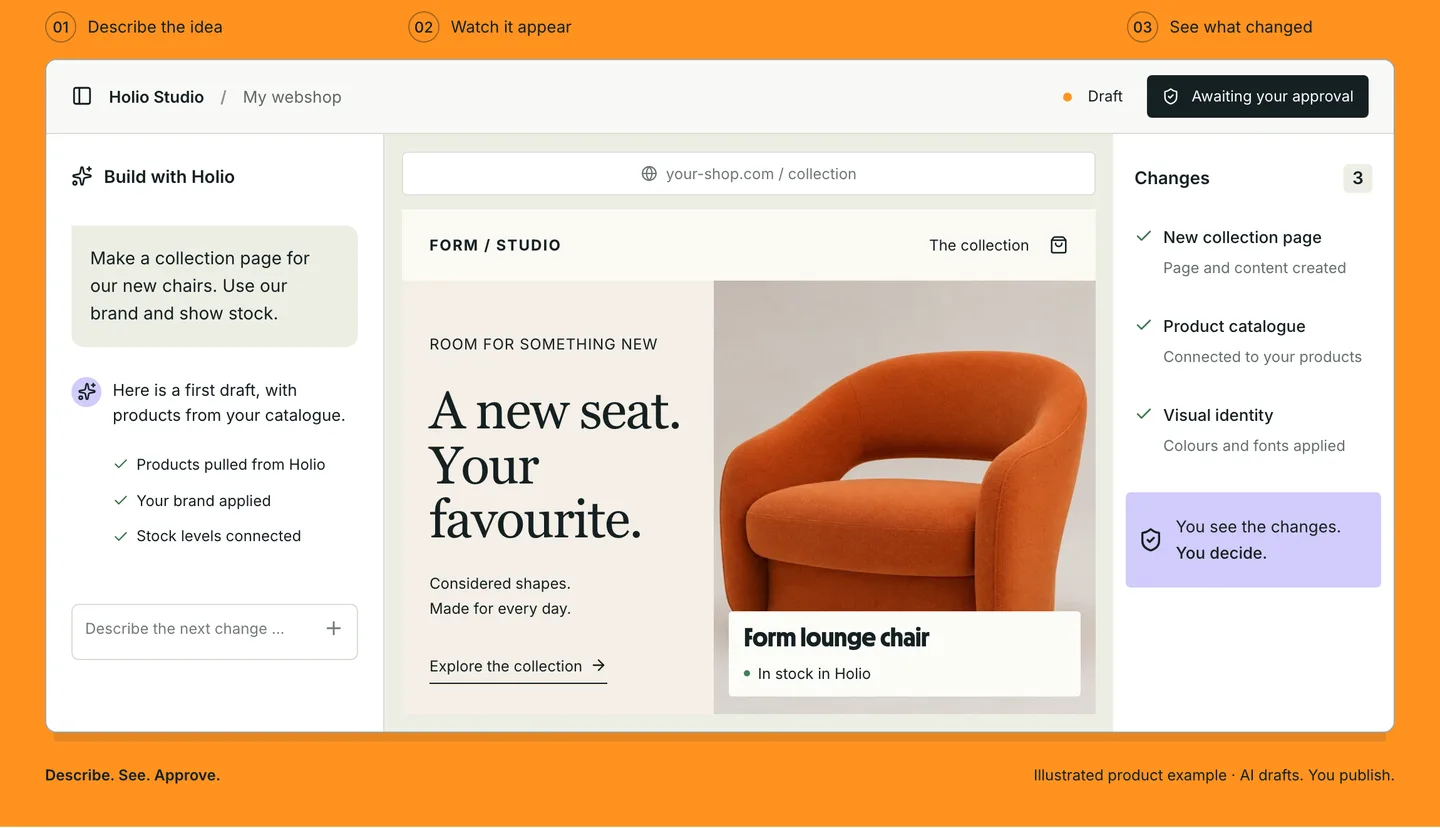
Other builders have to create a runtime per project: a repo, a build, a container, a preview URL, a database. On Holio a page is a row in your own platform. The row is the preview.
Four kinds of things, one way of working
Each one is a description in and a readable change out. What is available today is marked; the rest is on the roadmap and says so.
App screens and CRM pages
A returns list for the warehouse, a customer card your sales team actually wants, a KPI row for Monday morning. Every screen gets a URL and a place in the menu.
Websites and webshop pages
Marketing pages, a help centre, a blog, product and category pages on the catalogue you already run. Themes are tokens, never CSS.
Your own data objects
A wholesale account, a roasting batch, a service ticket: describe the object and it becomes a real table in your tenant, with a list, forms and saved views for free.
Functions and app components
Server-side functions your developers write, and small interactive components in a page. Both run in a sandbox with no network and no credentials, on a per-tenant budget.
Connected on day one
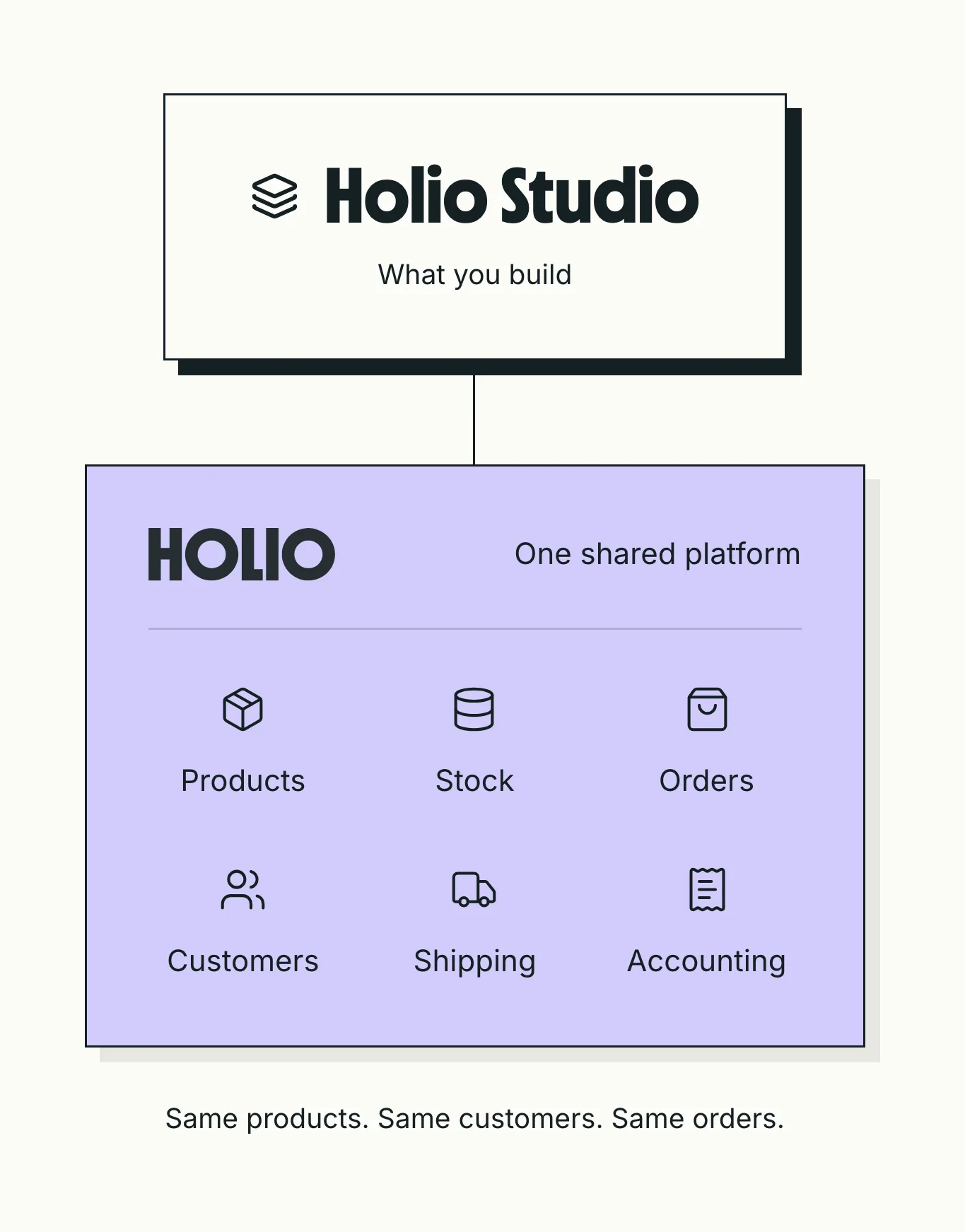
A Studio shop is not integrated with your operation. It is your operation, seen from the front: the product on the page is the product in the catalogue, the stock it shows is what the warehouse holds, and a sale lands as an order where every other order is handled.
Shipping comes with carrier rates through Profrakt, the platform used by more than 1,500 Norwegian online stores. Accounting is Visma Business NXT mirrored into the platform. The customer on the page is the customer in HubSpot. There is nothing to wire up afterwards.
Three panes. One loop.
A model that writes a page is a demo. A model that writes a page you can read in ten seconds and reject in one is a tool. Studio is built around the second sentence.
Describe it in the chat
Plain language, in English or Norwegian. The assistant only reaches typed, allow-listed tools, and it works inside your tenant: it cannot choose which company it is editing.
Read the preview and the change rail
The preview is the real page. Next to it, a readable diff of what changed, each change carrying its commit and its validation result. If it is wrong, say so, or reject it.
Publish with one click
Publishing is yours. When you click, the draft becomes the live row and the previous version is kept as a revision you can restore.
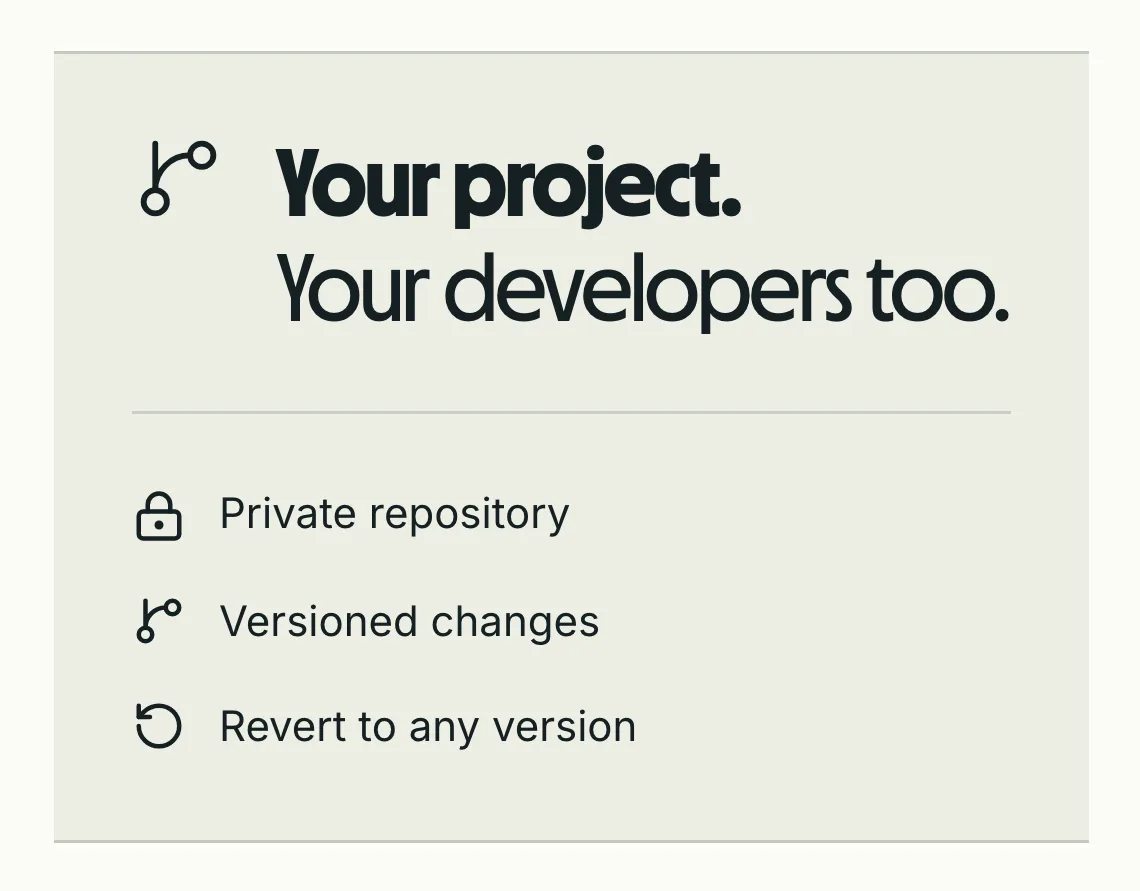
It is also a git repository. Yours.
Every Studio project is a private repository your own developers can clone, edit and push. A draft is a branch, a publish is a pull request, a revert is a git operation.
One command, holio validate, gives the same verdict in the Studio, in your CI and in the sandbox — so a page that passes on a laptop passes everywhere.
What people ask first
Do we need to be on Holio already?
Studio is the building environment on the Holio platform, so yes — it builds on the orders, catalogue and customers that live there. If you are not on Holio yet, the walkthrough starts with the platform and ends with your first page.
Can the AI publish on its own?
No. Everything the AI makes is a draft. There is no tool in the system that lets a model make a page live; publishing is a button a person clicks, and the previous version is kept as a revision.
Where does the data live?
In the EU. The platform runs on Google Cloud in European regions, and the models run on Vertex AI in the EU. Anything that would leave the EU sits behind a switch that is off unless you turn it on.
Can our own developers work on it?
Yes. Every project is a private git repository in an organisation where nobody else has access by default. Your team clones it, edits it and opens pull requests like any other codebase — see Developers.
What does it cost?
Studio is part of the Holio platform, and the price follows the modules and volume you run through it. We set it after a walkthrough so the number is one you can plan on — see Contact.
Bring one page you wish you had
A 30-minute walkthrough on your own Holio tenant. We build the page with you, you read the change rail, and you decide whether to publish.